Last Call Is a Choice, Not a Law of Nature: What Happens When American Cities Stay Up Later
Photo: The original uploader was Jeff dean at English Wikipedia., Attribution, via Wikimedia Commons
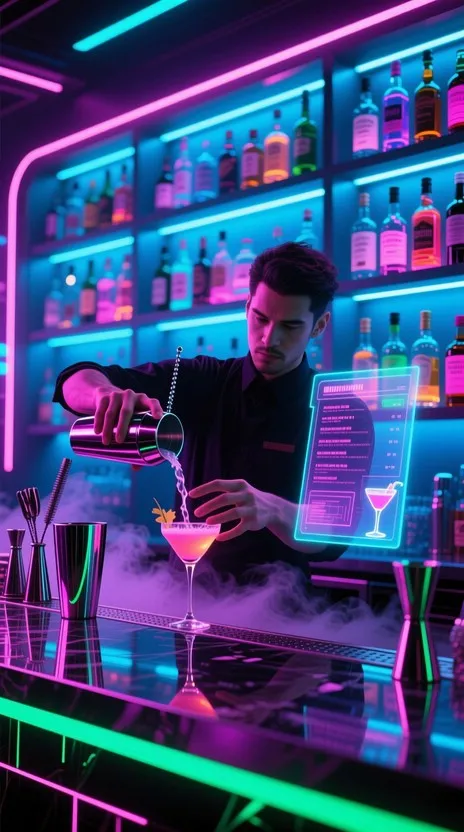
There's a specific kind of heartbreak that happens at 1:47 a.m. in an American bar. The DJ is finally hitting the good part of the set. The crowd has thinned out just enough that there's room to actually dance. And then the lights come up — that harsh, fluorescent reminder that the night isn't ending because it's over, but because a rulebook says it has to.
Here's the thing nobody tells you at that moment: the rulebook is a mess, and it's optional.
Closing Time Is a Patchwork, Not a Principle
There is no national last call in the United States. Liquor licensing lives at the state level, and states have delegated it to counties and cities, which means closing times across the country look like a quilt sewn by thirteen different people who never spoke to each other.
In New York City, bars pour until 4 a.m. In Boston, across two and a half hours of I-90, most places stop at 2. Nevada famously lets Las Vegas stay open around the clock — which is why the casino floor at 5 a.m. feels as normal as a coffee shop. Meanwhile, in parts of the South and Midwest, you can be cut off before midnight in certain counties, or not served at all on Sundays.
None of these hours were designed. Most trace back to wartime conservation rules, temperance-era hangovers, and post-Prohibition compromises that simply never got revisited. The 2 a.m. last call that governs most of America isn't a carefully reasoned policy. It's a default setting nobody bothered to change.
The Economics of an Early Night
Talk to anyone who studies nightlife for a living and you'll hear the same word over and over: displacement.
When a city forces its bars to close at 2, the demand for a night out doesn't vanish — it just relocates. It squeezes into the two hours before last call, which means faster drinking, packed venues, and everyone spilling onto the street at exactly the same moment. Nightlife economists have pointed out for years that a synchronized closing time creates a synchronized problem: thousands of people, all leaving at once, all looking for a cab or a slice, all slightly worse for wear.
Cities that have loosened the leash — New York with its 4 a.m. licenses, Vegas with no closing time at all — see a different pattern. The night stretches. People pace themselves. The 3 a.m. crowd is smaller, calmer, and often the most interesting people in the building.
There's a real economic tail to this too. Later hours mean later shifts, and later shifts mean money flowing to cooks, drivers, cleaners, and the entire 3 a.m. economy that keeps our dance floors fed. A city that shuts down at 2 is essentially taxing the second half of its own nightlife.
What If New York and Miami Never Closed?
Every few years, the idea of 24-hour liquor laws surfaces in New York, and every few years it dies in Albany. The objections are predictable: noise, drunk driving, neighborhood disruption. They're not baseless concerns — but the evidence from cities that have tried later hours suggests the fears get overstated.
Consider what actually happened when New York's subway started running 24/7, or when cities like Berlin and Madrid — where clubs routinely close at sunrise — normalized staggered exits. Transit demand spreads out. Bar closings stop being a stampede. And the city develops what nightlife advocates call a 'third shift' culture: restaurants that serve late, transit that runs late, a workforce built around the idea that not everyone's day ends at midnight.
Miami is the natural American experiment. The city already markets itself as a place where the night is the point. Yet even there, the 5 a.m. cutoff for clubs shapes everything — the booking schedules, the door times, the way a night peaks at 2 because it has to. Imagine a Miami where an international DJ actually plays at their real peak hour instead of being squeezed into a 1 a.m. slot so everyone can be out by five.
The Part Nobody Wants to Say Out Loud
Here's the honest trade: later last call means more drinking hours, and that's a real safety consideration. But the research increasingly suggests the bigger risk isn't how late a bar is open — it's the cliff-edge closing that dumps everyone outside simultaneously. Staggered closings, better late-night transit, and venues that can legally serve food and water past 2 a.m. all correlate with safer streets, not more dangerous ones.
So the next time those lights come up at 1:47 and the night dies with its shoes on, remember: somewhere in Nevada, someone is ordering a drink right now, and the city is fine. Last call isn't a law of nature. It's a choice. And it's one American cities could make differently — starting with the ones that call themselves cities that never sleep.