Say It Like You Belong: The Secret Language of the Velvet Rope
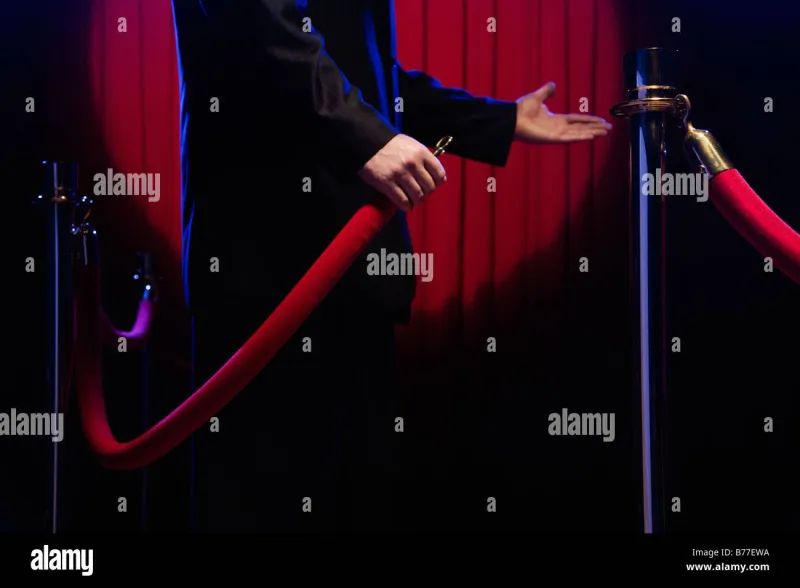
Photo: nightclub doorman velvet rope entrance crowd night, via c8.alamy.com
There's a moment at every club door that nobody talks about. It happens before the ID check, before the list scan, before anyone glances at your shoes. It's the first five seconds — the ones where the person working the rope isn't evaluating what you said, but how you said it.
We spent a few weeks talking to door staff in Miami, Los Angeles, and Brooklyn. What we heard back, over and over, was the same thing: the door is an audio experience long before it's a visual one. And most people have no idea they're broadcasting their whole night in one sentence.
The First Sentence Is the Whole Interview
"People think we're looking at outfits," says Marcus, who's worked doors in Miami for over a decade. "Bro, I've already made up my mind by the time you finish your first sentence."
What's in that sentence? More than you'd think. Volume is the big one. Groups that arrive loud — shouting over each other, announcing themselves to the whole block — read as chaos before they've reached the rope. Door staff aren't judging your energy; they're predicting it. If you can't modulate on the sidewalk, the logic goes, you won't modulate on the dance floor.
The counterintuitive part? The people who get waved through fastest are usually the quietest. Not meek — just... unhurried. There's a calm that comes from knowing the night will still be there in twenty minutes, and door staff can hear it.
Tone Is the Tell
In Los Angeles, where the line between industry and regular guest can be razor thin, tone does most of the sorting. "There's asking a question, and there's demanding an answer," explains Priya, who runs doors at a couple of Hollywood spots. "Same words. Completely different night for you."
The classic mistake is the upward inflection — the voice that turns every statement into a plea. "Is this the line?" "Do you know if it's busy?" Each one is fine on its own. String five together and you've painted a portrait of someone who's never done this before, which isn't a dealbreaker, but it does mean the staff is now managing you instead of just letting you in.
The flip side, and this matters: fake confidence is just as audible. The rehearsed casual name-drop, the too-relaxed "hey man" delivered like it was practiced in the Uber — door people hear hundreds of these a night. It doesn't offend them. It just doesn't do anything.
How Your Group Talks to Each Other
Here's the part almost nobody thinks about. While one of you is at the rope, the others are being listened to.
Brooklyn door veteran Sam put it plainly: "I watch the person in front of me, but I listen to the five people behind them. How you treat your friends on line is exactly how you'll treat my staff at 1 a.m."
Groups that argue on the sidewalk, talk over each other, or loudly rank themselves against the people waiting — that's data. Groups that joke with each other, keep each other in the loop, and handle the wait like it's part of the night instead of an obstacle in front of it? That's also data, and the good kind.
One host in Miami told us she specifically notices who in the group does the talking. "If one person handles it and the rest let them, that's a group that works. If three people all have different answers about how many you are, that's a group that's going to be a problem at the bar too."
The Vocabulary Trap
Should you name-drop? Know the DJ? Reference the promoter? The unanimous answer from everyone we spoke to: only if it's real.
"The fake name-drop is the funniest sound in nightlife," Sam laughs. "Someone says they know the owner, and I'm standing next to the owner. It's not even a gotcha. It's just sad."
But genuine knowledge lands differently. Knowing it's a listening bar night, not a bottle service night. Knowing the venue's actual name instead of "that club on Wythe." These aren't flexes — they're signals that you did the smallest amount of homework, which usually predicts you'll be a decent person inside.
The vocabulary that actually works is boring: hello, please, thank you, one question. Door staff deal with hundreds of people a night, and the ones who treat the interaction like a human one, not a transaction they're owed, are memorable in the best way.
Sounding Like a Regular Without Lying
So what's the actual playbook? It's simpler than the internet would have you believe.
Show up settled. Take a breath before you get to the rope. Whatever rush you're carrying, leave it on the sidewalk.
One spokesperson. Let whoever's most comfortable do the talking. Everyone else, hang back and be pleasant.
Match the door's volume. If it's a quiet entrance, keep it quiet. If the staff is hyped, you can be too.
Ask, don't demand. "What's the wait looking like?" beats "How long is this gonna take?" every single time.
Have a real answer ready. How many you are, what you're there for. Fumbling the basics makes everything harder.
None of this is about performing a personality you don't have. It's about the same thing every good night out is about: reading the room. The velvet rope just happens to be the first room.
And the people standing at it? They're not bouncers in the old sense — they're the closest thing nightlife has to hosts, curators, and critics all at once. They hear everything. Make it worth hearing.